Cave Painting #1: Going Back to the Beginning of Art
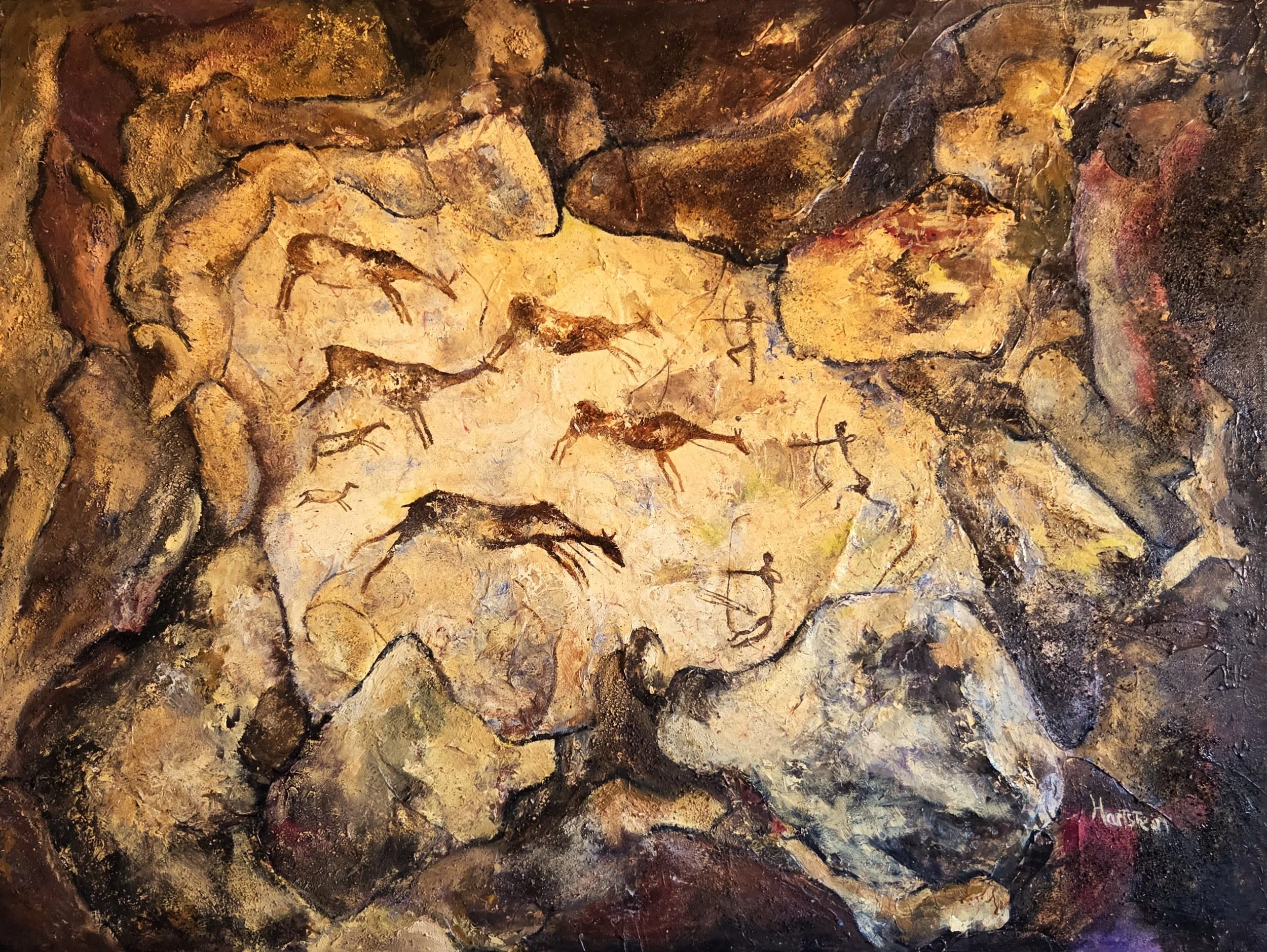
Cave Painting #1, Original Oil Painting by Michael Hartstein
There is something powerful about looking back at the first images humans ever made.
Before museums, before galleries, before written language, people were already making marks. They were painting animals on cave walls, tracing hands, recording movement, memory, danger, food, spirit, and survival. They were looking at the world around them and trying to hold onto it in image form.
That idea has stayed with me.
Cave Painting #1 is the first painting in a new series inspired by the earliest roots of art. I have always loved art history, not just because of the famous names or major movements, but because it shows how deeply the need to create runs through human life. Long before art became something to collect, frame, sell, study, or place in museums, it was simply something people did.
They made images because something mattered. That is what I wanted to connect with in this painting.
Why Cave Paintings Still Matter
Some of the earliest known cave paintings are tens of thousands of years old, and many of them focus on animals. Horses, bison, deer, pigs, handprints, hunting scenes, and mysterious figures appear across cave walls in different parts of the world.
What I find fascinating is that these ancient artists were not just decorating a space. They were responding to the world they lived in. The animals they painted were part of their daily lives, their survival, their stories, and possibly their spiritual beliefs. They meant something.
One of the most interesting things about cave art is how alive many of the animals feel. Even with simple materials and rough cave surfaces, the figures often have movement. A back curves. A leg stretches. A head turns. You can feel that the artist was watching closely.
That is something I connect with as a painter.
My own work is very different in color, technique, and time period, of course, but I understand that desire to look closely at nature and translate it into paint. Whether I am painting wildlife, flowers, landscapes, or a more symbolic piece like this one, I am always responding to nature and the feeling behind what I see.
The Idea Behind Cave Painting #1
With Cave Painting #1, I wanted to create a piece that felt ancient without simply copying a prehistoric cave wall.
The painting has earth tones, rough textures, animal forms, and a sense of movement across the surface. I wanted it to feel like something discovered, not overly polished or predictable. There is a worn, layered quality to it, almost as if the image has been shaped by time.
At the same time, this is still very much my interpretation.
I am not trying to recreate a historical artifact. I am painting from the feeling that cave art gives me: mystery, connection, memory, and respect for the natural world.
The animals in the painting are important. Animals have always been central to human imagination, and they continue to be central to my work. I am drawn to their shapes, their gestures, their energy, and the way they can carry emotion without needing words.
That is one reason wildlife and nature appear so often in my paintings. I like the idea that an animal can be both real and symbolic. It can be part of the natural world, but it can also stand for instinct, movement, humor, strength, or vulnerability.
A Connection Across Time
What interests me most about cave art is that it makes the past feel surprisingly close.
When you look at a cave painting, you are looking at a decision someone made thousands of years ago. Someone stood in front of stone and chose to make an image. They mixed pigment. They followed the shape of the wall. They painted something they had seen, remembered, feared, admired, or depended on.
That feels incredibly human.
Art changes over time. Materials change. Styles change. The places where we see art change. But the impulse behind it is still recognizable.
We still make images to remember.
We still make images to explain what matters.
We still make images to bring the outside world into our homes.
We still make images because words are not always enough.
That is the connection I wanted this painting to carry.
Bringing This Work Into a Home
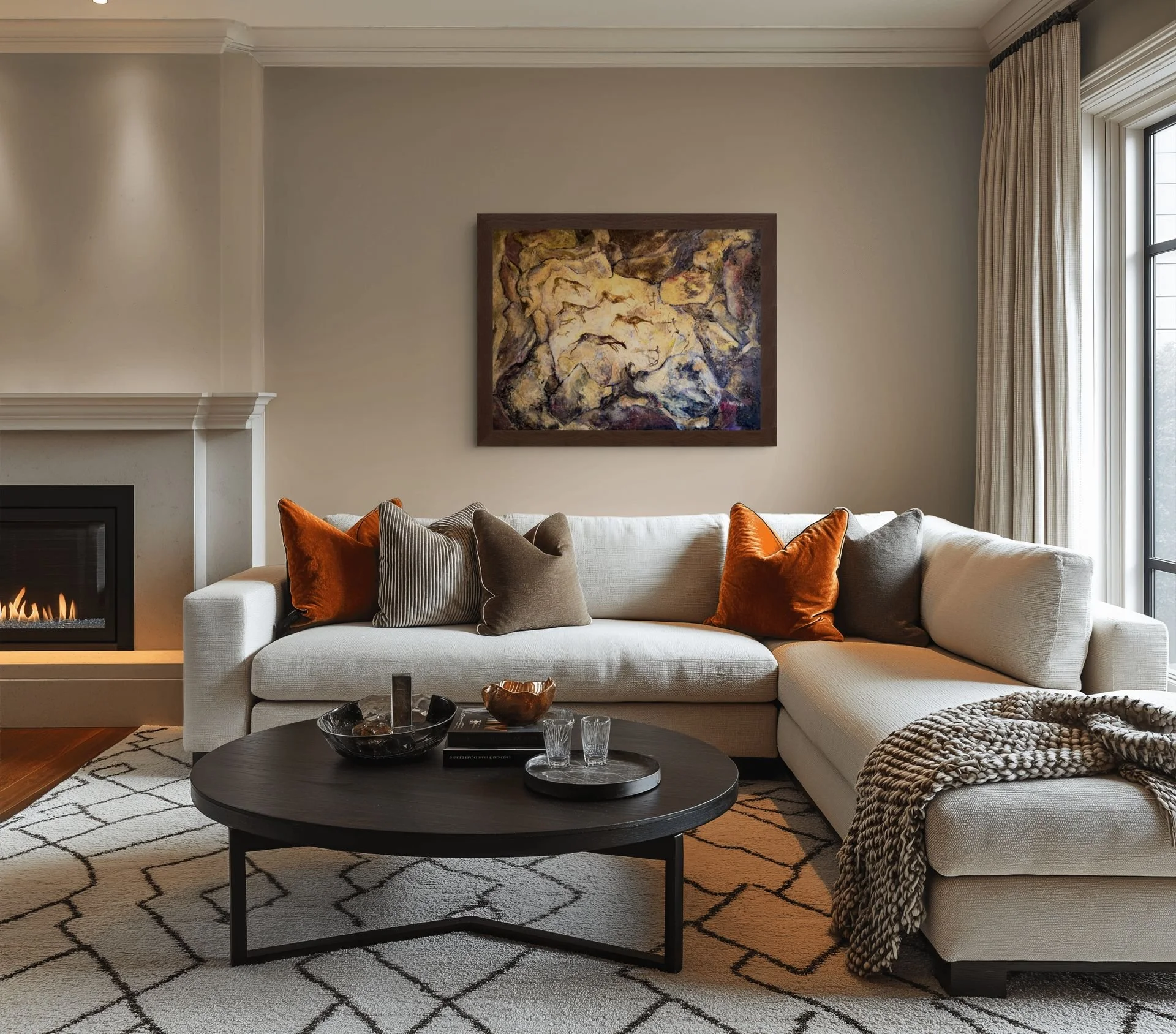
Cave Painting #1 has a different feeling than some of my brighter floral or landscape paintings. It is quieter, earthier, and more mysterious. It has warmth, but it also has depth.
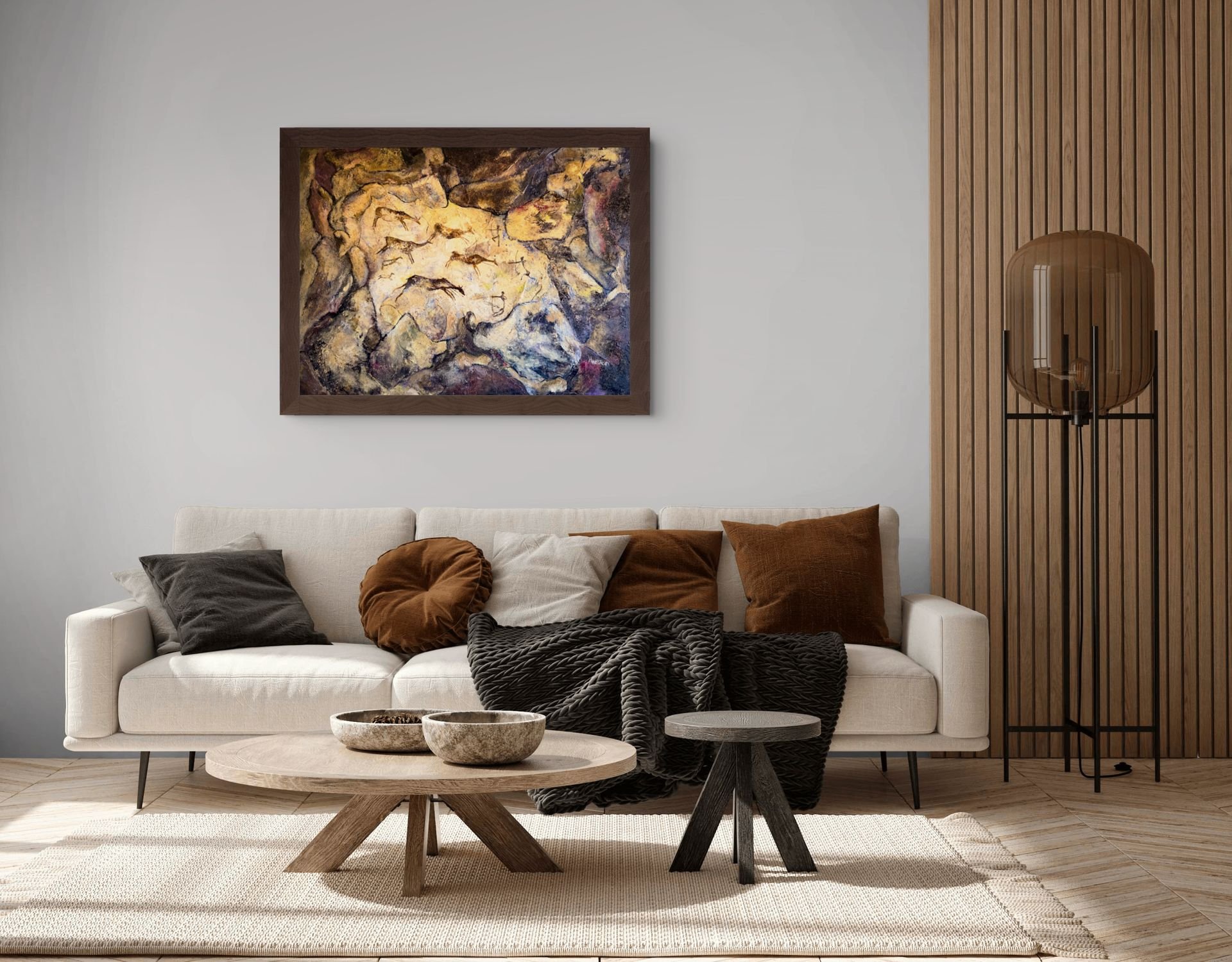
In a home, I see this piece working especially well in a space with natural textures, warm lighting, wood, stone, leather, woven fabrics, or neutral colors. It has enough presence to anchor a room, but it does not shout. It invites a closer look.
This is the kind of painting that can become a conversation piece, not because it is loud, but because it has a story behind it.
Cave Painting #1 connects to art history, nature, animals, and the very human need to create meaning through images. Art has a history. This is where the story begins.
Explore the other paintings in the series
Join my collector list for new paintings, upcoming shows, and first looks at available work.